Introduction
Artificial intelligence is used in many systems. It performs tasks that need human thinking. To understand it better, it is important to learn about its types. Each type has a different role and level of capability.
This article explains the main types of artificial intelligence. It helps beginners and students understand how these systems are grouped and how they work in different situations.
What Are Types of Artificial Intelligence
Types of artificial intelligence refer to the classification of systems based on their capability and function. These types show how a system performs tasks and how much it can learn or adapt.
Artificial intelligence can be divided into types based on capability and based on functionality.
Types Based on Capability
This classification focuses on how much a system can do compared to human intelligence.
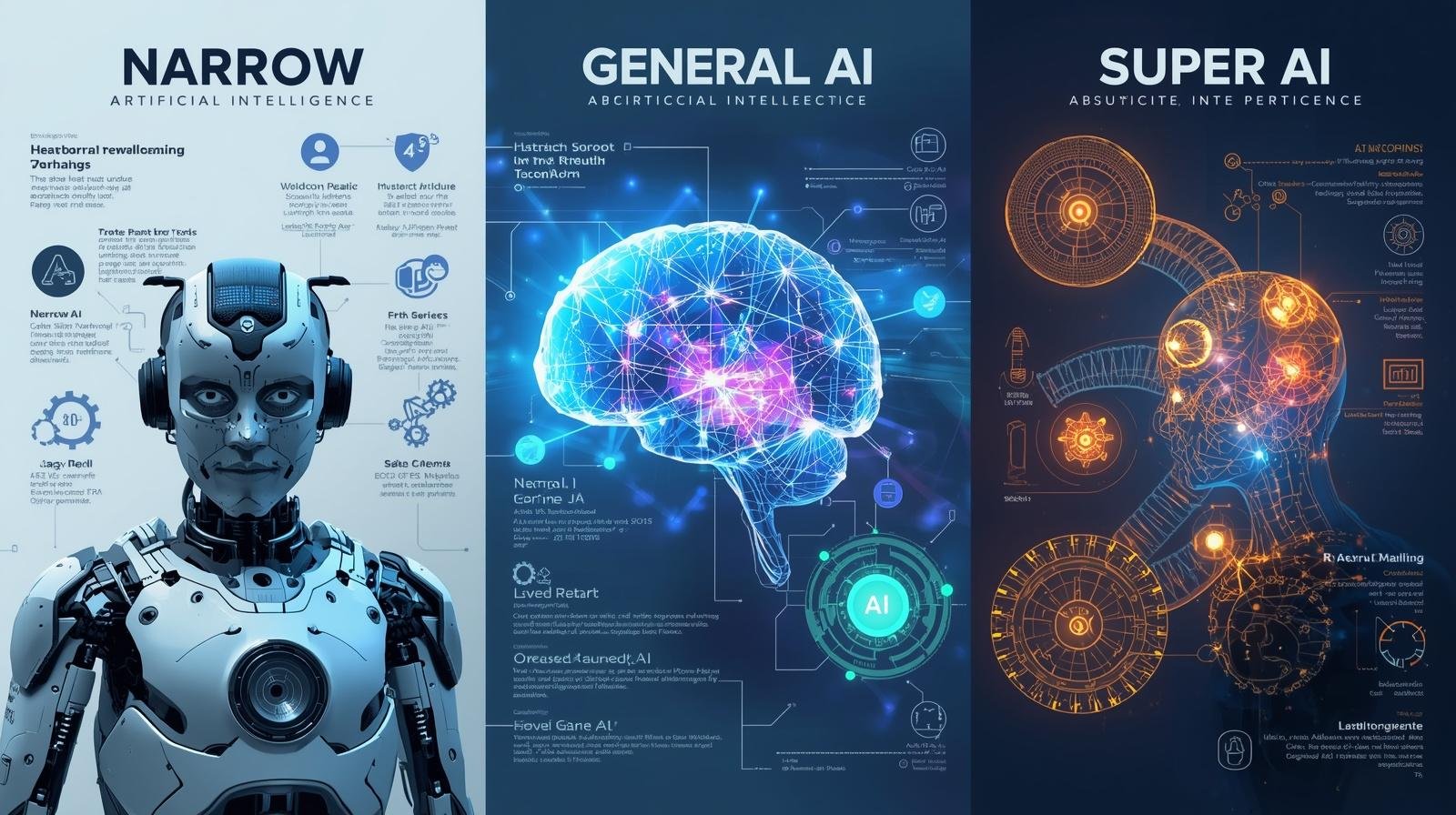
Narrow Artificial Intelligence
Narrow artificial intelligence is also known as weak artificial intelligence. It is designed to perform a single task or a limited set of tasks.
These systems cannot work beyond their defined function. They follow specific rules or patterns learned from data.
Examples include:
- Voice assistants
- Recommendation systems
- Image recognition systems
These systems are widely used today.
General Artificial Intelligence
General artificial intelligence refers to a system that can perform any intellectual task that a human can perform. It can understand, learn, and apply knowledge across different tasks.
This type of artificial intelligence is still under research. No system has reached this level yet.
Researchers aim to build systems that can think, reason, and solve problems in a way similar to humans.
Super Artificial Intelligence
Super artificial intelligence refers to a system that can perform beyond human intelligence. It would be able to solve complex problems, make decisions, and learn at a level higher than humans.
This type of artificial intelligence does not exist today. It is a concept discussed in research and theory.
Types Based on Functionality
This classification focuses on how systems process data and respond to inputs.
Reactive Machines
Reactive machines are the simplest type of artificial intelligence. They do not store past data. They only respond to current input.
These systems cannot learn from past experiences. They follow rules to produce output.
An example is a system that plays a game based on current moves without memory of past games.
Limited Memory Systems
Limited memory systems can use past data for a short time. They store data temporarily and use it to make decisions.
Many modern artificial intelligence systems use this type. For example, systems in transport use past data to guide actions.
These systems improve performance by learning from recent information.
Theory of Mind
Theory of mind refers to systems that can understand human emotions, beliefs, and intentions. These systems would be able to interact with humans in a deeper way.
This type is still under development. Researchers are working on systems that can understand human behavior.
Self Aware Systems
Self aware systems refer to artificial intelligence that has awareness of its own state. It would understand its own actions and existence.
This type does not exist today. It is part of future research and discussion.
Importance of Understanding These Types
Learning about types of artificial intelligence helps students and beginners understand how systems are designed.
It shows the limits of current systems and the goals of future research. It also helps in choosing the right tools for different tasks.
Real Use of Different Types
Most systems in use today fall under narrow artificial intelligence and limited memory systems.
Examples include:
- Search engines that provide results based on queries
- Online platforms that suggest content
- Systems that detect patterns in data
These systems focus on specific tasks and use data to improve performance.
Differences Between Types
Each type of artificial intelligence has different features.
- Narrow artificial intelligence focuses on one task
- General artificial intelligence aims to perform multiple tasks
- Super artificial intelligence aims to exceed human capability
In functionality:
- Reactive machines do not store data
- Limited memory systems use past data
- Theory of mind focuses on understanding humans
- Self aware systems focus on awareness
Challenges in Developing Advanced Types
Creating advanced types of artificial intelligence is not easy. It requires large amounts of data, computing power, and research.
Challenges include:
- Understanding human thinking
- Creating systems that can learn across tasks
- Ensuring safe use of artificial intelligence
- Managing ethical concerns
Future of Artificial Intelligence Types
Research continues to move from narrow systems toward more advanced types. Scientists aim to create systems that can learn in a flexible way.
Future systems may include features of general artificial intelligence. However, this will take time and effort.
Conclusion
Artificial intelligence can be divided into types based on capability and functionality. These types help explain how systems work and what they can do.
Today, most systems are narrow and task based. Advanced types such as general and self aware systems are still under research.
Understanding these types helps beginners and students learn how artificial intelligence is used and how it may develop in the future.