
The digital world has changed almost every part of modern life. People use smartphones to communicate, online banking to manage money, cloud platforms to store information, and social media to connect with others. Businesses rely on websites, applications, databases, and digital systems to serve customers and operate their organizations.
While this digital transformation has created incredible opportunities, it has also introduced new risks.
Cybercriminals are constantly looking for ways to steal information, disrupt services, commit fraud, or gain unauthorized access to digital systems. As technology continues to evolve, cybersecurity has become essential for protecting individuals, businesses, governments, and communities.
Cybersecurity is not only a technical issue. It is a fundamental part of building trust in the digital world.
What Is Cybersecurity?
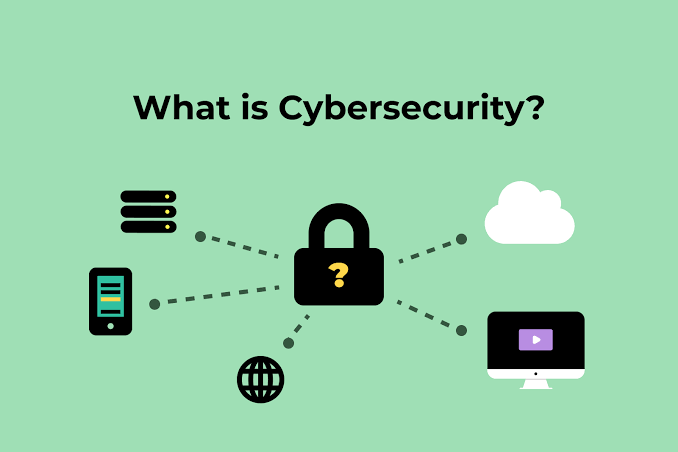
Cybersecurity is the practice of protecting computers, networks, devices, applications, and digital information from unauthorized access, attacks, damage, or disruption.
It involves a combination of technology, processes, policies, and human awareness.
Cybersecurity professionals work to identify potential risks, protect digital systems, detect suspicious activity, respond to incidents, and recover from attacks.
The purpose is not simply to prevent hackers from entering a system. Modern cybersecurity also focuses on protecting the confidentiality, integrity, and availability of information.
In simple terms, cybersecurity helps ensure that the right people can access the right information while keeping unauthorized individuals away.
Why Is Cybersecurity Important?
The amount of digital information generated every day continues to grow. Personal information, financial records, business documents, passwords, customer databases, and intellectual property are increasingly stored or transferred digitally.
This makes digital information valuable to cybercriminals.
A successful cyberattack can have serious consequences. Individuals may lose money or have personal information exposed. Businesses may experience downtime, financial losses, reputational damage, and legal problems.
For this reason, cybersecurity should be considered a priority rather than an optional feature.
Common Cybersecurity Threats
Cyber threats can take many forms. Understanding common risks is one of the first steps toward improving digital security.
Phishing
Phishing is a common form of cyberattack in which criminals attempt to trick people into providing sensitive information or clicking on malicious links.
A phishing message may appear to come from a bank, company, colleague, or familiar service.
The message may create a sense of urgency and ask the recipient to verify an account, open an attachment, or provide login details.
Learning to recognize suspicious messages can significantly reduce the risk of falling victim to phishing.
Malware
Malware is malicious software designed to damage systems, steal information, monitor activity, or perform unauthorized actions.
Viruses, worms, spyware, and ransomware are examples of malicious software.
Malware can enter devices through unsafe downloads, malicious attachments, compromised websites, or other methods.
Ransomware
Ransomware is a type of malware that can prevent users from accessing their files or systems. Attackers may demand payment in exchange for restoring access.
Organizations can reduce the impact of ransomware by maintaining secure backups, updating systems, training employees, and using appropriate security controls.
Password Attacks
Weak or reused passwords can make accounts easier to compromise.
Using strong, unique passwords for important accounts is an important basic security practice.
Multi-factor authentication can provide another layer of protection even if a password is compromised.
Social Engineering
Social engineering attacks manipulate people rather than directly attacking technology.
An attacker may pretend to be an employee, customer, manager, or trusted organization to persuade someone to reveal information or perform an unsafe action.
This highlights an important reality of cybersecurity: people are an essential part of digital security.
The Importance of Strong Passwords
Passwords remain one of the most common ways people protect online accounts.
Unfortunately, many users still rely on passwords that are easy to guess or reuse across multiple websites.
A strong password should generally be long, unique, and difficult for others to predict.
Using a password manager can make it easier to create and manage unique passwords for different accounts.
For particularly important accounts, such as email, banking, and business systems, users should also enable multi-factor authentication whenever it is available.
Multi-Factor Authentication
Multi-factor authentication, often called MFA, provides additional protection by requiring more than one form of verification.
For example, after entering a password, a user may need to provide a verification code, approve a login through an authentication application, or use another authentication method.
This creates an additional barrier for attackers.
Even if someone obtains a password, accessing the account may still be difficult without the second authentication factor.
Cybersecurity for Businesses
Businesses of all sizes need cybersecurity.
Large companies may have dedicated security teams, while small businesses may have fewer resources. However, the fundamental security principles remain important.
Businesses should consider protecting:
- Customer information
- Employee accounts
- Financial records
- Business applications
- Websites
- Cloud services
- Internal networks
- Intellectual property
- Backup systems
Regular software updates, employee training, access controls, secure backups, and security monitoring can help organizations reduce their exposure to cyber threats.
Cybersecurity should also be included in business planning rather than treated as a problem only for the IT department.
Cybersecurity and Remote Work
Remote work has changed how employees access business systems.
Instead of working exclusively from a company office, employees may connect from homes, coworking spaces, hotels, or other locations.
This flexibility provides many benefits but can also introduce additional security considerations.
Employees should use secure networks, keep devices updated, protect accounts with strong authentication, and follow company security policies.
Businesses should also carefully manage access to corporate applications and sensitive information.
The Role of Artificial Intelligence in Cybersecurity
Artificial intelligence is becoming increasingly relevant to cybersecurity.
Security systems can use AI and machine learning techniques to analyze large amounts of information and identify unusual patterns.
For example, automated systems may help identify suspicious login activity, unusual network behavior, or potential security incidents.
At the same time, cybercriminals can also use advanced technologies to improve their attacks.
This creates an ongoing technological competition between attackers and defenders.
As AI develops, cybersecurity professionals will need to focus on using these technologies responsibly while maintaining appropriate human oversight.
Cloud Security
Cloud computing has become an important part of modern technology.
Organizations use cloud platforms to store data, run applications, collaborate with employees, and deliver digital services.
However, moving information to the cloud does not automatically make it secure.
Businesses need to properly configure cloud services, control user permissions, protect sensitive information, monitor activity, and understand their responsibilities under the chosen cloud model.
Good cloud security requires both technology and effective policies.
Cybersecurity Awareness: The Human Factor
One of the most important parts of cybersecurity is human awareness.
A highly advanced security system can still be undermined by a simple mistake, such as clicking a suspicious link or sharing confidential information with the wrong person.
Cybersecurity training can help employees recognize common threats and understand how to respond appropriately.
Organizations can conduct regular awareness programs covering phishing, password security, social engineering, safe browsing, data protection, and incident reporting.
Creating a security-conscious culture can make a significant difference.
Protecting Personal Information Online
Individuals also have an important role to play in protecting their digital lives.
Simple habits can improve online security:
- Use unique passwords for important accounts.
- Enable multi-factor authentication.
- Keep software and devices updated.
- Avoid clicking suspicious links.
- Be careful when downloading files.
- Review account privacy settings.
- Avoid sharing unnecessary personal information.
- Use secure connections when handling sensitive information.
- Monitor financial and online accounts for unusual activity.
- Keep important data backed up.
Cybersecurity does not require everyone to become a technical expert. Small, consistent habits can provide meaningful protection.
The Importance of Software Updates
Software updates are often associated with new features or performance improvements, but they can also address security vulnerabilities.
When developers discover security weaknesses, they may release patches to fix them.
Delaying important updates can leave systems exposed for longer periods.
Keeping operating systems, applications, browsers, mobile devices, and security software updated is therefore an important part of basic cybersecurity hygiene.
Data Backups and Cyber Resilience
Even strong security measures cannot guarantee that an organization or individual will never experience a cyber incident.
This is why backups are important.
A reliable backup strategy can help users recover important information after accidental deletion, hardware failure, ransomware, or another disruptive event.
Businesses should regularly test their backups to make sure that data can actually be restored when needed.
This approach is part of a broader concept known as cyber resilience—the ability to prepare for, withstand, recover from, and adapt to cybersecurity incidents.
Challenges Facing Cybersecurity
Cybersecurity is becoming more complex as technology evolves.
The increasing number of connected devices creates a larger digital environment that needs protection. Cloud computing, remote work, artificial intelligence, mobile applications, and connected systems can introduce new security considerations.
Another challenge is the shortage of skilled cybersecurity professionals.
Organizations need people who understand security technologies, risk management, incident response, privacy, and emerging threats.
Continuous learning is essential because the threat landscape can change quickly.
The Future of Cybersecurity
The future of cybersecurity will involve increasingly advanced technologies and more sophisticated security strategies.
Artificial intelligence, behavioral analytics, automated threat detection, identity management, zero-trust approaches, and stronger authentication technologies are likely to remain important areas of development.
However, technology will not be enough by itself.
Future cybersecurity will also depend on better education, stronger organizational policies, responsible technology development, international cooperation, and greater awareness among everyday users.
Cybersecurity will become increasingly connected to every aspect of digital life.
How Can We Build a Safer Digital Future?
Creating a safer digital future requires cooperation between individuals, businesses, technology companies, governments, and cybersecurity professionals.
Individuals need to develop safer online habits.
Businesses need to protect their systems and customer information.
Technology providers need to build security into products and services.
Governments and institutions can establish appropriate standards and policies while supporting cybersecurity education and awareness.
Most importantly, security should be considered from the beginning rather than added only after a problem occurs.
Conclusion
Cybersecurity is one of the most important challenges of the digital age.
As people and organizations become more dependent on technology, protecting digital systems and information becomes increasingly important. Cyber threats such as phishing, malware, ransomware, social engineering, and account attacks can affect anyone.
Fortunately, cybersecurity is not only about advanced tools. Strong passwords, multi-factor authentication, software updates, secure backups, employee education, and careful online behavior can all contribute to a safer digital environment.
The future will undoubtedly bring new technologies and new challenges. By combining innovation with responsible security practices, we can build a digital world that is not only more connected and convenient but also more trustworthy and resilient.
Securing our digital future is a shared responsibility—and every secure action matters.
Frequently Asked Questions About Cybersecurity
What is cybersecurity in simple words?
Cybersecurity is the practice of protecting digital devices, networks, applications, accounts, and information from unauthorized access, attacks, damage, or disruption.
Why is cybersecurity important?
Cybersecurity helps protect personal information, financial data, business systems, customer records, and other digital assets from cyber threats and unauthorized access.
What are the most common cybersecurity threats?
Common threats include phishing, malware, ransomware, password attacks, social engineering, malicious links, and unauthorized account access.
How can I improve my online security?
Use strong and unique passwords, enable multi-factor authentication, keep software updated, avoid suspicious links, protect personal information, and maintain backups of important data.
What is multi-factor authentication?
Multi-factor authentication is a security method that requires users to provide more than one form of verification when accessing an account.
Can artificial intelligence improve cybersecurity?
Yes. AI can help security systems analyze large amounts of information, identify unusual behavior, detect potential threats, and support security teams. However, AI can also be misused by attackers, so responsible security practices remain important.