Cloud infrastructure has become an important part of modern technology. From small businesses and startups to large international companies, organizations are moving their applications, websites, databases, and digital services to cloud-based environments. The main reason is simple: cloud infrastructure can provide flexibility, scalability, performance, and access to computing resources without requiring companies to build and maintain all of their own physical hardware.
But what exactly is cloud infrastructure, how does it work, and why is it important?
In this guide, we will explore the meaning of cloud infrastructure, its main components, benefits, challenges, types, and practical uses.
What Is Cloud Infrastructure?
Cloud infrastructure is the collection of hardware and software resources that provides cloud computing services over the internet. It includes servers, storage systems, networking equipment, virtualization technologies, security tools, and management software.
Instead of purchasing physical servers and installing them in an office or private data center, organizations can use computing resources provided by a cloud service provider. These resources can usually be accessed remotely and adjusted according to business requirements.
For example, a company may need only a few servers when it launches a new website. If the website becomes popular and receives thousands of visitors, the company can increase its computing resources. This ability to increase or decrease resources is one of the most important advantages of cloud infrastructure.
Main Components of Cloud Infrastructure
Cloud infrastructure consists of several important components. Each component performs a specific function and works together to deliver cloud services.
1. Computing Resources
Computing resources include servers, processors, memory, and other resources required to run applications and processes. Cloud providers operate large numbers of physical servers and make their computing capacity available to customers.
Virtual machines are commonly used to divide physical computing resources into multiple virtual environments. This allows different applications and customers to use resources efficiently.
2. Cloud Storage
Storage is another major part of cloud infrastructure. Businesses need storage for documents, databases, images, videos, application files, backups, and other information.
Cloud storage allows users to store data remotely and access it through the internet. Organizations can also increase storage capacity as their data requirements grow.
3. Networking
Networking connects cloud resources and allows users and applications to communicate with them. It includes virtual networks, routers, firewalls, load balancers, and other networking technologies.
A well-designed cloud network can help applications communicate efficiently while controlling access to sensitive resources.
4. Virtualization
Virtualization allows one physical server to run multiple virtual environments. Each virtual environment can operate almost like an independent computer.
This technology helps cloud providers use physical hardware more efficiently. It is one of the technologies that made modern cloud computing practical at large scale.
5. Security
Security is a critical part of cloud infrastructure. Organizations may store valuable business information, customer data, and application resources in the cloud.
Cloud security can include identity management, encryption, firewalls, access controls, monitoring, threat detection, and backup strategies. Businesses should also follow appropriate security practices when configuring their cloud environments.
Types of Cloud Infrastructure
Cloud infrastructure can be deployed in different ways depending on an organization’s needs.
Public Cloud
A public cloud is operated by a third-party cloud provider. Computing, storage, networking, and other resources are made available to multiple customers through a shared infrastructure.
Public cloud environments are popular because businesses can access resources without purchasing large amounts of physical hardware.
Private Cloud
A private cloud is designed for the use of a single organization. It can provide greater control over infrastructure and may be useful for businesses with specific security, compliance, or customization requirements.
Private cloud environments can be hosted inside an organization’s own data center or managed through an external provider.
Hybrid Cloud
Hybrid cloud infrastructure combines public and private cloud environments. A business might keep sensitive workloads in a private environment while using public cloud resources for applications that require additional scalability.
This approach can provide organizations with more flexibility, although managing multiple environments can also introduce additional complexity.
Multi-Cloud
A multi-cloud strategy involves using cloud services from more than one provider. An organization might use different providers for different applications or services.
Multi-cloud environments can reduce dependence on a single provider and allow businesses to select services based on their technical requirements.
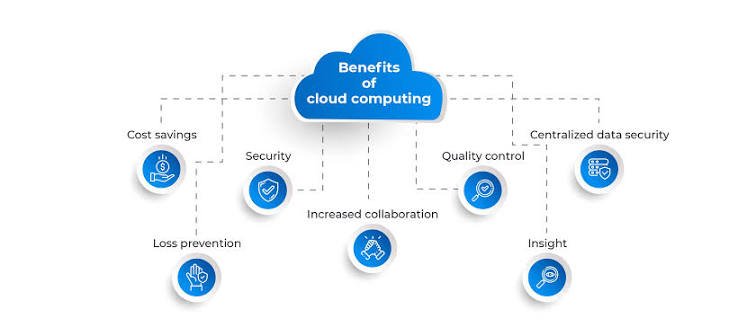
Benefits of Cloud Infrastructure
Cloud infrastructure offers several advantages for organizations of different sizes.
Scalability
Businesses can increase or decrease resources according to demand. For example, an online store may require additional computing capacity during a major sales event and fewer resources during quieter periods.
Cost Efficiency
Traditional infrastructure often requires businesses to purchase servers, networking equipment, cooling systems, and other hardware in advance. Cloud infrastructure can reduce the need for large upfront investments because organizations can access resources based on their requirements and provider pricing models.
Flexibility
Cloud resources can generally be accessed from different locations and devices, depending on the service configuration. This flexibility supports remote teams, distributed applications, and modern digital businesses.
Faster Deployment
Setting up physical servers can take time. Cloud platforms can allow organizations to create computing and storage resources much more quickly.
This helps development teams test applications, launch new services, and respond to changing business requirements.
Reliability
Cloud providers typically operate large data centers with redundant systems. Redundancy can help reduce the impact of individual hardware failures when infrastructure is properly designed and configured.
However, businesses should still create appropriate backup and disaster recovery plans.
Cloud Infrastructure for Businesses
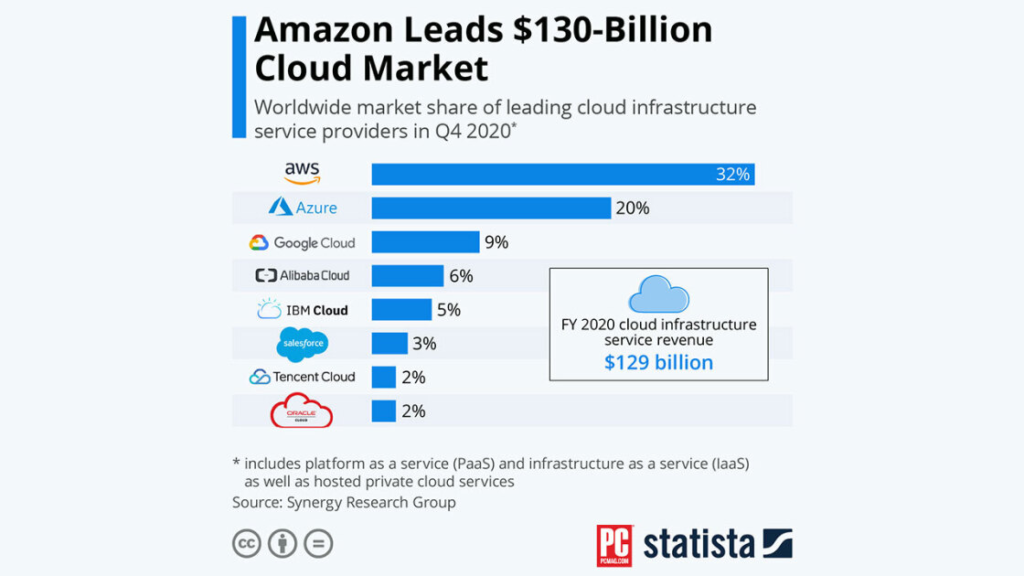
Businesses increasingly depend on digital services to communicate with customers, process transactions, manage employees, and store information. Cloud infrastructure can provide the foundation for these activities.
For example, an e-commerce company may use cloud servers to operate its website, cloud databases to manage product and customer information, storage services for images and files, and networking services to deliver content to customers.
A growing business can also adjust its infrastructure as its customer base changes. This can be particularly useful for startups that cannot accurately predict future demand.
Cloud Infrastructure and Application Development
Cloud infrastructure has also changed the way software is developed and delivered.
Developers can create temporary environments for testing applications without purchasing dedicated physical servers. Development teams can also automate the deployment of applications and infrastructure using modern tools.
Technologies such as containers, orchestration platforms, and infrastructure automation have made cloud environments even more flexible.
For example, developers can package an application with its required dependencies and deploy it consistently across different environments.
Challenges of Cloud Infrastructure
Although cloud infrastructure offers many benefits, it is not automatically the right solution for every organization.
Security Risks
Poorly configured cloud resources can create security problems. Weak passwords, excessive permissions, exposed storage, and outdated software can increase risk.
Organizations should use strong authentication, access controls, monitoring, encryption, and regular security reviews.
Cost Management
Cloud services can become expensive when resources are not monitored properly. Businesses should track usage, remove unnecessary resources, and establish appropriate spending controls.
Complexity
Large cloud environments can contain hundreds or thousands of resources. Managing networks, applications, permissions, databases, and security policies can become complicated.
Skilled IT professionals and proper management practices are often necessary for larger environments.
Internet Dependency
Many cloud services depend on network connectivity. If an organization experiences internet problems, users may temporarily lose access to cloud-based applications and resources.
Best Practices for Cloud Infrastructure
Organizations can follow several practices to build a reliable cloud environment.
First, they should clearly understand their business and technical requirements before selecting services. Not every application needs the same amount of computing power or storage.
Second, security should be considered from the beginning rather than added later. Access should be limited to users and applications that actually need it.
Third, organizations should monitor performance and costs regularly. Monitoring can help identify unusual activity, inefficient resources, and potential performance problems.
Finally, businesses should maintain backups and develop a disaster recovery strategy. A cloud environment does not eliminate the need for data protection.
The Future of Cloud Infrastructure
Cloud infrastructure will continue to evolve as organizations adopt artificial intelligence, machine learning, data analytics, Internet of Things applications, and other technologies.
Automation is expected to play an increasingly important role. Businesses will continue looking for ways to automatically deploy, monitor, secure, and optimize their infrastructure.
Edge computing is another important development. Instead of processing every request in a centralized data center, some workloads can be processed closer to users or connected devices. This can help reduce latency for applications that require fast responses.
Sustainable computing is also becoming increasingly important. Cloud providers and businesses are looking for ways to improve energy efficiency and make better use of computing resources.
Frequently Asked Questions About Cloud Infrastructure
1. What is cloud infrastructure?
Cloud infrastructure is the combination of servers, storage, networking, virtualization, and security technologies used to provide computing resources through the internet.
2. How does cloud infrastructure work?
Cloud infrastructure uses physical and virtual resources in data centers to provide computing, storage, networking, and other services to users over the internet.
3. What are the main components of cloud infrastructure?
The main components include computing resources, cloud storage, networking, virtualization, security systems, and infrastructure management tools.
4. What are the different types of cloud infrastructure?
The major types include public cloud, private cloud, hybrid cloud, and multi-cloud infrastructure.
5. Why is cloud infrastructure important for businesses?
It can help businesses scale resources, deploy applications faster, support remote operations, and reduce the need for extensive physical hardware.
6. Is cloud infrastructure secure?
Cloud infrastructure can be highly secure when it is properly configured and managed. Businesses should use strong authentication, access controls, encryption, monitoring, and regular security reviews.
7. What is the difference between cloud infrastructure and cloud computing?
Cloud infrastructure refers to the underlying technology and resources, such as servers, storage, and networks. Cloud computing refers more broadly to delivering computing services using those resources.
8. Can small businesses use cloud infrastructure?
Yes. Small businesses can use cloud infrastructure for websites, applications, databases, file storage, backups, and other technology needs without necessarily maintaining their own physical data center.
9. What are the challenges of cloud infrastructure?
Common challenges include security risks, unexpected costs, complex management, performance issues, and dependence on reliable internet connectivity.
10. What is the future of cloud infrastructure?
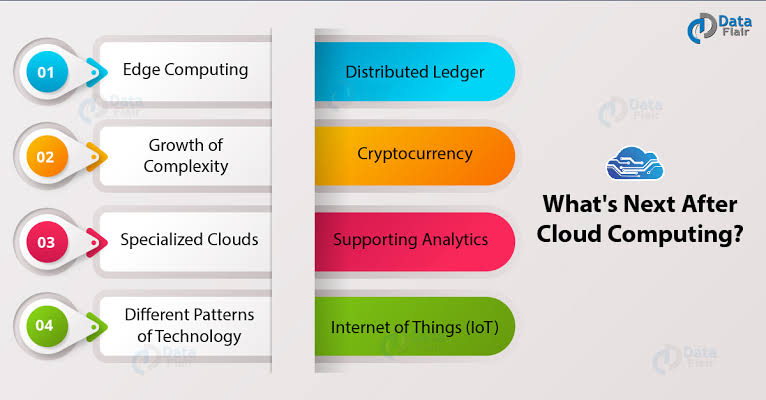
The future of cloud infrastructure is expected to involve greater automation, artificial intelligence, edge computing, improved security, and more energy-efficient technologies.
Conclusion
Cloud infrastructure provides the foundation for many modern digital services. It combines computing, storage, networking, virtualization, security, and management technologies to deliver flexible IT resources over the internet.
For businesses, cloud infrastructure can provide scalability, flexibility, faster deployment, and potentially more efficient use of technology resources. At the same time, organizations need to pay attention to security, cost management, reliability, and infrastructure complexity.
Whether a company is launching a small website or operating a large digital platform, understanding cloud infrastructure can help decision-makers choose better technology strategies. As cloud computing continues to develop, cloud infrastructure will remain an important part of the modern technology landscape.