Edge computing is one of the important technologies changing the way modern digital systems process and manage data. Every day, billions of devices generate huge amounts of information through smartphones, cameras, sensors, smart appliances, vehicles, and industrial machines. Traditionally, much of this data is sent to centralized cloud servers for processing. However, sending everything to a distant data center can sometimes cause delays, increase network traffic, and create challenges for applications that need instant responses.
This is where Edge Computing becomes useful.
Edge computing brings data processing and computing resources closer to the place where data is created. Instead of sending every piece of information to a central cloud server, some data can be processed locally or near the user. This can make applications faster, more responsive, and more efficient.
For students and beginners, understanding edge computing is valuable because it connects several major areas of technology, including cloud computing, artificial intelligence, the Internet of Things, networking, cybersecurity, and data processing.
What Is Edge Computing?
Edge computing is a computing approach in which data is processed closer to the source where it is generated instead of sending all data to a centralized data center.
The word “edge” refers to the edge of a network, meaning locations that are physically or logically close to users and devices. These locations can include routers, gateways, local servers, industrial computers, smartphones, or other connected devices.
For example, imagine a smart security camera monitoring a building. The camera continuously produces video data. If every video frame had to travel to a distant cloud server before being analyzed, the system could experience delays and consume significant network bandwidth.
With edge computing, an edge device can analyze the video locally. If it detects something important, such as unusual movement, it can send only the relevant information to a central server.
This simple example shows why edge computing can be useful when speed and efficiency matter.
How Does Edge Computing Work?
The basic process of edge computing is relatively simple.
First, a device generates data. This device could be a sensor, camera, smartphone, vehicle, machine, or another connected system.
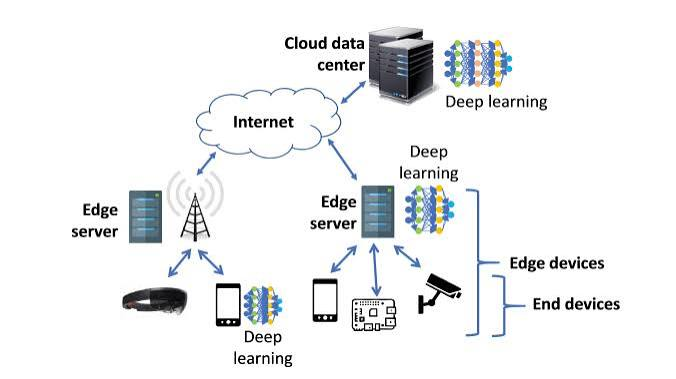
Second, instead of immediately sending all the information to a remote cloud environment, the data is sent to a nearby edge device or edge server.
Third, the edge system processes the information locally. Depending on the application, it may analyze, filter, organize, or respond to the data.
Finally, important results or selected information can be sent to a central cloud or data center for additional processing, storage, reporting, or long-term analysis.
This creates a relationship between edge computing and cloud computing. They are not necessarily competing technologies. In many modern systems, they work together.
The edge handles tasks that benefit from local processing, while the cloud can handle large-scale storage, advanced analytics, centralized management, and other computing workloads.
Why Is Edge Computing Important?
The growth of connected devices has created an enormous amount of data. Smartphones, smart homes, factories, hospitals, vehicles, and businesses all generate information continuously.
If every device sends all of its data to a centralized cloud server, networks can become heavily loaded. Applications that require immediate decisions may also suffer from delays.
Edge computing addresses some of these challenges by processing information closer to where it is generated.
One major advantage is lower latency. Latency refers to the time required for data to travel from one location to another and for a response to return. When processing happens nearby, the response can often be faster.
Another advantage is reduced bandwidth usage. Instead of transferring every piece of raw data to the cloud, an edge system can process information and transmit only useful results.
Edge computing can also improve reliability. Some applications may continue performing important local operations even when connectivity to a central cloud service is limited.
Edge Computing vs. Cloud Computing
Cloud computing and edge computing are closely related, but they work differently.
Cloud computing generally uses centralized data centers to provide computing resources, storage, applications, and services over a network. Users can access these resources without maintaining all the necessary infrastructure locally.
Edge computing moves some of those computing capabilities closer to users and data sources.
Consider a smart factory. A cloud platform might store production records and provide long-term analytics. At the same time, an edge computer inside the factory could monitor machines and identify unusual behavior immediately.
In this situation, both technologies provide value.
Cloud computing is useful for centralized management and large-scale workloads, while edge computing is useful for fast local decisions.
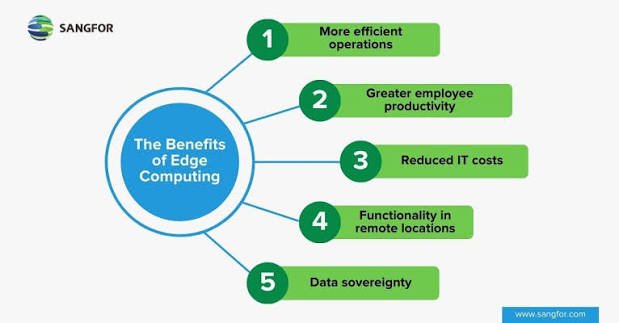
Main Benefits of Edge Computing
1. Faster Response Times
One of the biggest benefits of edge computing is speed. When data does not need to travel to a distant server before being processed, applications can respond more quickly.
This is especially important for systems that require near-real-time decisions.
2. Reduced Network Traffic
Large amounts of raw data can consume network bandwidth. Edge computing allows devices to process and filter data locally.
Only important information may need to be transferred to the cloud, reducing unnecessary network traffic.
3. Improved Reliability
Some edge applications can continue operating locally even if communication with a central server is temporarily interrupted.
This can be useful in environments where a continuous network connection cannot always be guaranteed.
4. Better Data Management
Organizations may generate enormous amounts of information. Processing data closer to its source can help organizations decide what needs to be stored permanently and what can be discarded after analysis.
5. Support for Real-Time Applications
Applications involving immediate responses can benefit significantly from edge computing.
Examples include industrial monitoring, connected vehicles, smart cameras, robotics, and certain healthcare technologies.
Applications of Edge Computing
Edge computing is used in many industries and technologies.
Smart Cities
Smart cities use connected sensors to monitor traffic, public infrastructure, energy consumption, environmental conditions, and other services.
Instead of sending every sensor reading to a distant data center, local edge systems can analyze information and provide rapid responses.
For example, an edge system could analyze traffic conditions and help control traffic signals based on current road activity.
Healthcare

Healthcare environments can generate large amounts of data from medical devices and monitoring systems.
Edge computing can help process certain information closer to where it is produced. This may support faster monitoring and analysis, while cloud systems can be used for broader data storage and analysis.
Healthcare applications require strong privacy, security, and regulatory controls, so edge computing must be implemented carefully.
Manufacturing
Modern factories use sensors, machines, cameras, and automated systems to monitor production.
An edge computer can analyze machine data locally and identify unusual patterns. If a machine begins behaving differently from normal, the system may generate an alert quickly.
This can help businesses identify potential problems before they become larger operational issues.
Autonomous and Connected Vehicles
Vehicles can generate and process large amounts of information from cameras, sensors, navigation systems, and other components.
For applications that require rapid decisions, processing information locally can be valuable.
A vehicle may need to react to changing road conditions without waiting for information to travel to a distant server and return.
Smart Homes
Smart homes contain connected cameras, thermostats, lights, appliances, speakers, and security systems.
Edge computing can allow some processing to happen directly on devices or through local systems. This can improve responsiveness and potentially reduce the amount of information sent to external servers.
Edge Computing and the Internet of Things
The Internet of Things (IoT) is one of the major technologies associated with edge computing.
IoT devices are physical objects that connect to networks and collect or exchange data. Examples include smart watches, sensors, industrial machines, connected vehicles, and smart appliances.
As the number of IoT devices increases, the amount of generated data also increases.
Sending all this information to a centralized cloud environment may not always be practical. Edge computing provides a way to process some of the data closer to IoT devices.
For this reason, edge computing and IoT often work together.
Edge Computing and Artificial Intelligence
Artificial intelligence can also benefit from edge computing.
Traditional AI applications may send data to cloud servers for processing. However, some AI models can run directly on edge devices.
This approach is often called edge AI.
For example, a smart camera may use an AI model to identify objects locally. Instead of continuously uploading a complete video stream, the camera could send an alert when a specific event is detected.
Local AI processing can provide faster responses and may reduce the amount of data that needs to leave the device.
Challenges of Edge Computing
Although edge computing offers many advantages, it also creates challenges.
One challenge is management. Organizations may have hundreds or thousands of edge devices distributed across different locations. Maintaining, updating, monitoring, and securing these devices can be difficult.
Security is another important concern. A centralized data center can be heavily protected, but edge devices may be located in offices, factories, vehicles, public areas, or other less-controlled environments.
Another challenge is limited computing resources. Some edge devices have less processing power, memory, and storage than large cloud servers.
Organizations therefore need to carefully decide which tasks should be processed at the edge and which should remain in the cloud.
Is Edge Computing Secure?
Edge computing can support secure system designs, but it does not automatically make a system secure.
Because data processing occurs across many distributed devices, security must be considered at every level.
Organizations may use encryption, authentication, access controls, secure software updates, monitoring, and other security practices to protect edge environments.
Students interested in cybersecurity should pay particular attention to edge computing because distributed systems create new security considerations.
The Future of Edge Computing
The future of edge computing is closely connected to the growth of IoT, artificial intelligence, 5G and other advanced networking technologies.
As more devices become connected, organizations will need efficient ways to process the growing volume of data.
Future systems may combine cloud platforms, edge servers, AI models, and connected devices into a single distributed computing environment.
Instead of relying entirely on centralized cloud processing, computing resources may be distributed across different locations according to application requirements.
This could lead to faster applications, more efficient networks, and new technology services.
How Students Can Learn Edge Computing
Students who want to learn edge computing can start with basic computer networking and cloud computing concepts.
A good learning path is to understand:
- Computer networks
- Cloud computing
- Internet of Things
- Linux fundamentals
- Virtualization
- Databases
- Cybersecurity
- Artificial intelligence
- Basic programming
After learning these foundations, students can explore practical edge computing concepts such as edge devices, gateways, containers, distributed systems, and edge AI.
Small projects can also be useful. For example, a student could build a simple IoT project where a sensor sends information to a local computer for processing. This can demonstrate how data can be analyzed locally instead of always being sent to a remote server.
Frequently Asked Questions About Edge Computing
1. What is Edge Computing?
Edge computing is a technology that processes data closer to where it is generated instead of sending all data to a centralized cloud server. It can help reduce delays and improve the speed of applications.
2. How does Edge Computing work?
Edge computing works by processing data on or near the device that generates it. Edge devices or local servers analyze the data and may send only important information to a central cloud server.
3. What is the difference between Edge Computing and Cloud Computing?
Cloud computing generally processes data in centralized data centers, while edge computing processes some data closer to users and devices. Both technologies can work together to create efficient computing systems.
4. What are the benefits of Edge Computing?
Major benefits include faster response times, reduced network traffic, improved reliability, efficient data processing, and better support for real-time applications.
5. Where is Edge Computing used?
Edge computing is used in smart cities, healthcare, manufacturing, smart homes, connected vehicles, security systems, retail, and Internet of Things (IoT) applications.
6. Is Edge Computing related to IoT?
Yes. Edge computing and the Internet of Things are closely connected. IoT devices generate large amounts of data, and edge computing can process some of that data closer to the devices.
7. Is Edge Computing secure?
Edge computing can be secure when appropriate security measures are used. Organizations should protect edge devices with authentication, encryption, access controls, secure updates, and continuous monitoring.
8. How can students learn Edge Computing?
Students can start by learning computer networking, cloud computing, IoT, Linux, programming, cybersecurity, and basic artificial intelligence. Practical IoT and local data-processing projects can also help students understand edge computing.
Conclusion
Edge computing is an important technology that brings computing and data processing closer to the devices and users that generate data. It can reduce latency, lower network traffic, support real-time applications, and improve the efficiency of distributed systems.
For beginners and students, edge computing is especially useful to study because it connects several major areas of modern technology, including cloud computing, IoT, artificial intelligence, networking, and cybersecurity.
The technology does not necessarily replace cloud computing. Instead, edge and cloud computing can work together. Edge systems can handle time-sensitive local processing, while cloud platforms can provide centralized storage, management, and large-scale analytics.
As connected devices continue to grow, understanding edge computing can give students a strong foundation for learning about the future of distributed computing and digital technology.